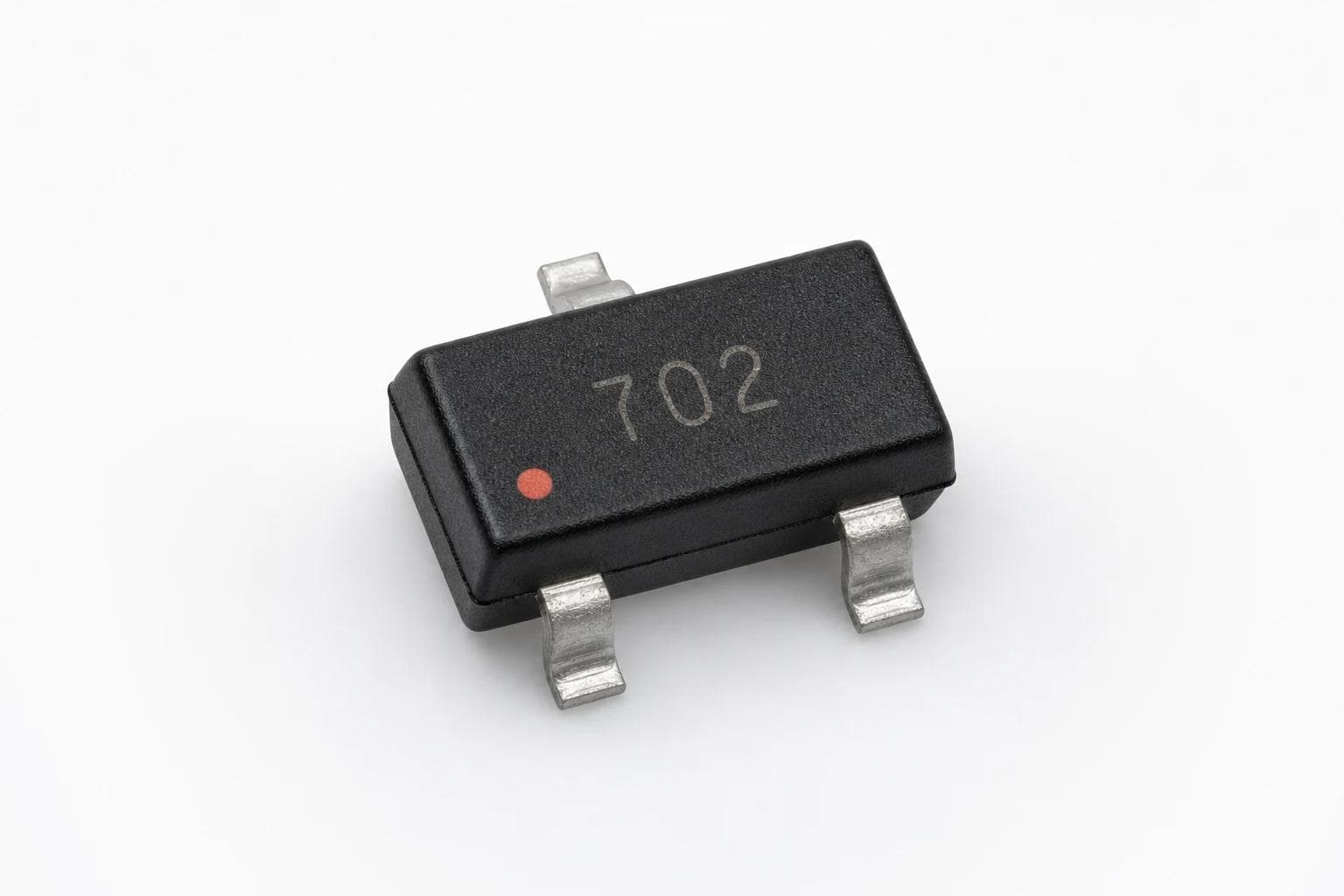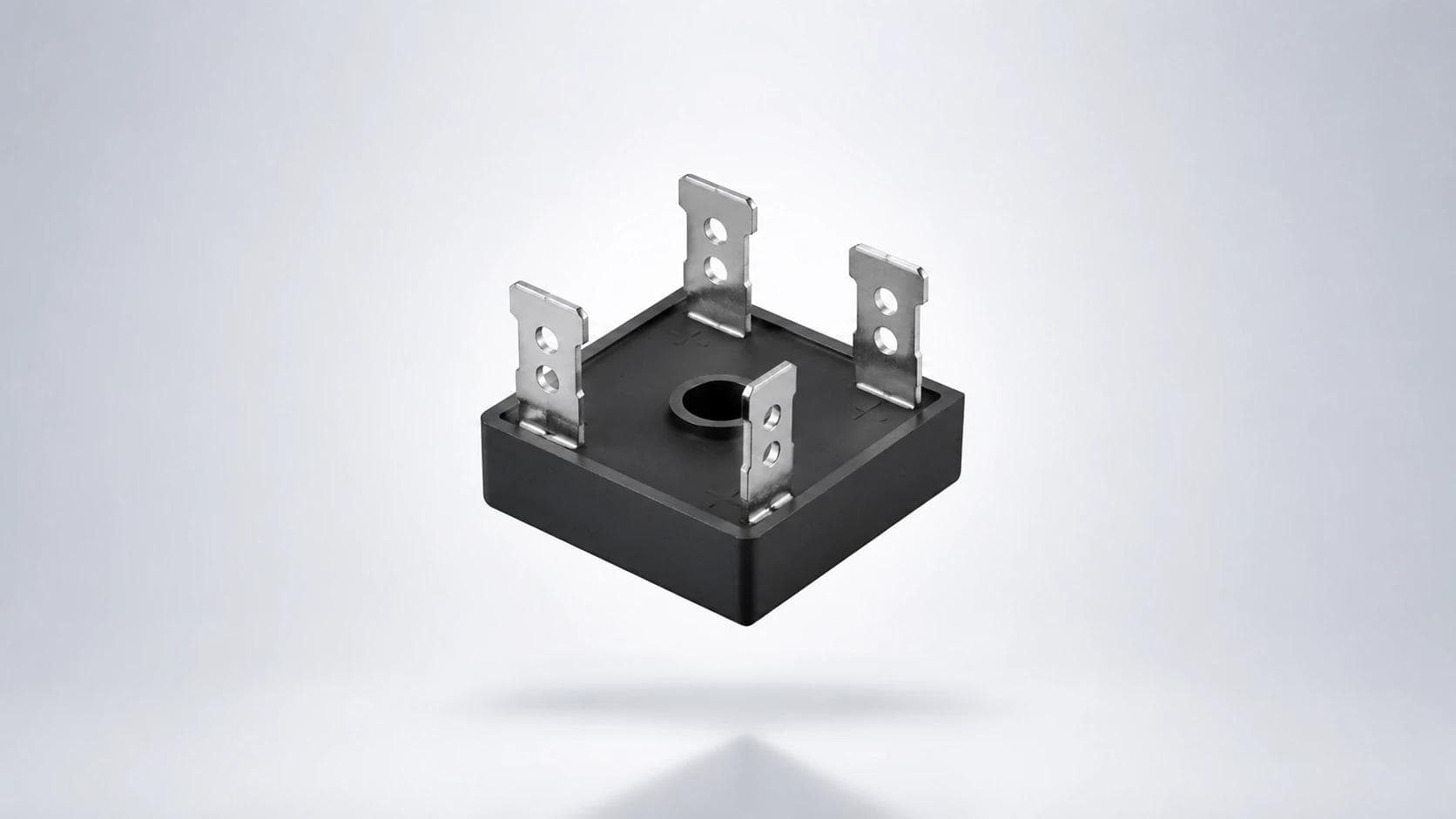
Schottky rectifiers are widely used where efficiency, switching speed, and compact size matter. Their lower forward voltage can reduce conduction loss, but leakage current and reverse-voltage capability must be evaluated across temperature.
Forward voltage is an operating-point value
A single typical forward-voltage number does not describe every load condition. Compare the curve or tabulated value at the intended current and junction temperature, then include the result in the power-loss estimate.
Build margin around reverse voltage
Select reverse-voltage rating from the measured repetitive waveform and expected transients, not only the nominal rail. Layout inductance and switching edges can introduce overshoot that changes the required margin.
Connect package selection to heat flow
| Design input | Review point |
|---|---|
| Load current | Forward voltage and average conduction loss |
| Reverse voltage | Repetitive peak plus transient margin |
| Ambient and board temperature | Leakage and junction-temperature rise |
| PCB copper area | Package heat spreading |
| Switching waveform | Overshoot, ringing, and EMI |
The most efficient choice is the device that remains inside its electrical and thermal envelope across the complete duty cycle—not necessarily the part with the lowest room-temperature typical forward voltage.